Articles
Cooling without batteries – thoroughly tested technology strengthens resilience in critical environments
arrow_backTo the overview01 July 2026 | Teknologisk Institut - Refrigeration and Heat Pump Technology
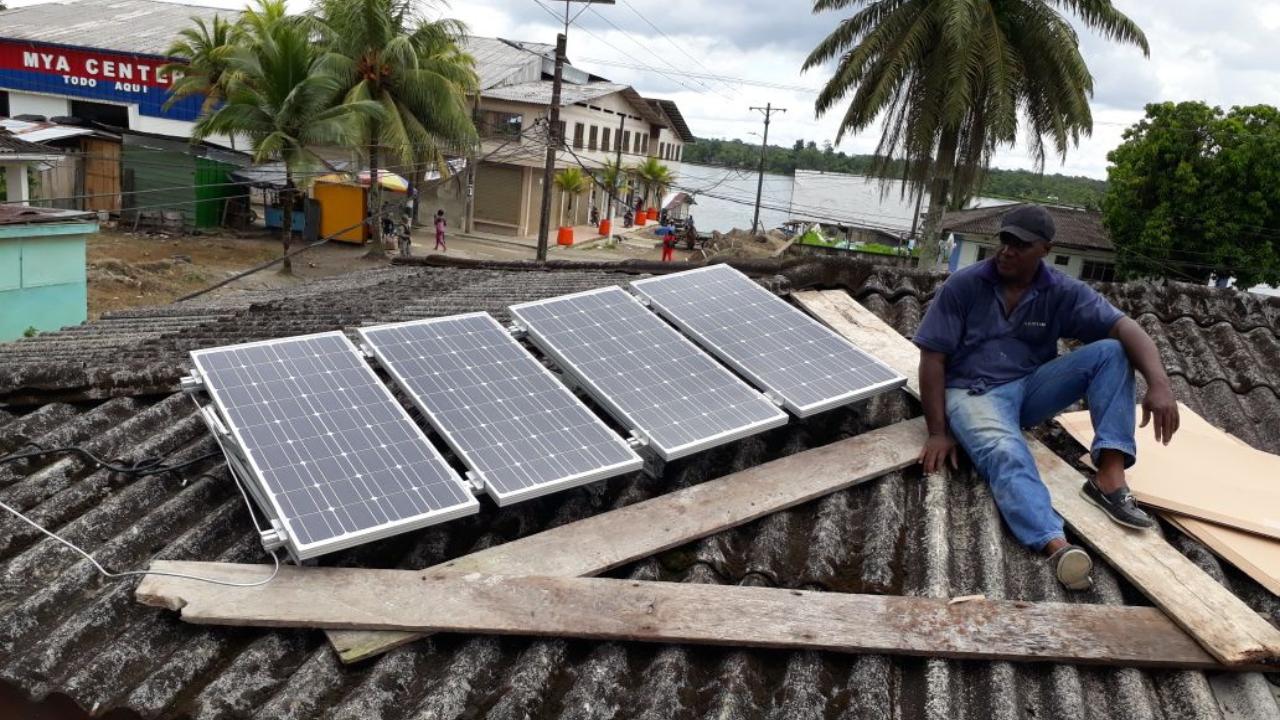
In areas without a stable power supply, can access to uninterrupted cooling be vital – whether for life-saving medicine or temperature-sensitive hardware. Through the global project SolarChill, Danish Technological Institute has for over two decades contributed to the development and deployment of a groundbreaking, battery-free technology for solar-powered cooling.
Through an advanced system design that directly couples solar energy with thermal energy storage, the project has demonstrated how to achieve temperature control completely without the use of batteries.
Although the technology was originally matured to ensure the uninterrupted cooling of vaccines and food in global off-grid areas, the principles can help solve three of the greatest challenges of mobile and temporary installations: logistical complexity, extreme temperatures, and the need for minimal traceability.
The ice battery that survives power failures for five days
The technological breakthrough behind SolarChill is based on three key technological solutions that significantly reduce vulnerability in thermal systems.
First and foremost is the complete elimination the use of batteries, which are a vulnerable link in mobile cooling systems. Whereas older solar-powered refrigerators relied on batteries to start the compressor, the compressor in the SolarChill system is coupled directly to solar energy via a specially developed "soft start" technology.
Instead of storing electrical power, the solar energy is instantly converted into cooling, which is thermally stored in an integrated ice storage – a so-called "ice battery". When the sun shines, the system produces an ice buffer in a closed section of the cabinet. When the power or the sun fails, a combination of the cabinet's thick insulation and the passive ice storage ensures that the correct temperature is kept stable for up to five days.
The refrigeration circuit itself is also designed to meet strict environmental requirements. By transitioning the system to the natural refrigerant isobutane (R600a), reliance on fluorinated greenhouse gases (F-gases/HFCs) is eliminated. This transition ensures full compliance with stricter environmental regulations and chemical legislation without compromising performance under extreme conditions.
By eliminating batteries and regulated refrigerants, the logistical, environmental, and operational weaknesses of traditional cooling under extreme conditions are removed.
Robust solutions for mobile and temporary needs
The experience gained from building and optimising these battery-free systems for humanitarian efforts can be directly transferred to the development of mobile and transportable HVAC systems and heat pumps for temporary camps, field deployments, and container systems. Within these applications, the technology provides three crucial advantages:
• Reduction of acoustic and thermal signatures: By integrating energy storage and utilising solar energy directly, mechanical cooling systems can be designed to periodically run quietly and optimally. This reduces both the acoustic signature (noise and vibration) and the thermal signature (reduction of heat radiation) can be reduced for long periods of time, significantly increasing tactical security.
• Logistics and self-sufficiency: Integrating energy storage and running on alternative energy sources reduces the need for fuel for generators. This significantly simplifies the supply chain to remote or temporary camps.
• Precision for critical missions: The highly sensitive temperature control (e.g. between 2 °C and 8 °C for medical supplies) can be applied to protect temperature-sensitive hardware, such as mobile servers, radar systems, and critical IT and communication equipment.
From digital twins to extreme laboratory testing
The journey from idea to approved, reliable technology goes through the Danish Technological Institute's high-tech testing and development facilities. Here, the institute’s impartial services cover the entire development chain.
In the early stages, digital twins and advanced simulation tools are used to design, simulate, and optimise the customised thermal systems virtually under changing global climate scenarios.
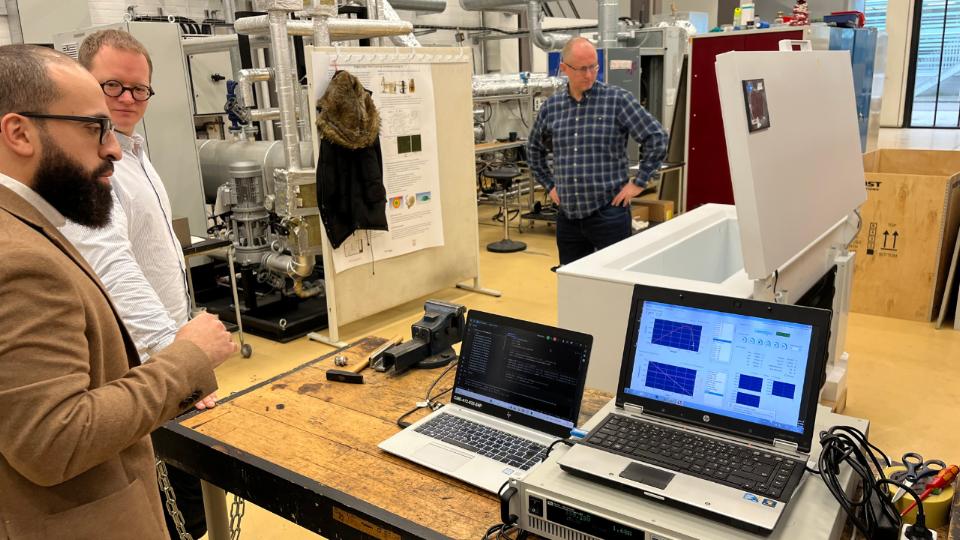
Subsequently, physical prototypes are built and tested under controlled conditions in the institute’s climate chambers to ensure final testing, verification, and documentation. Today, this testing expertise forms the basis for the institute to carry out independent verifications of cooling equipment according to the strictest international standards.
Impartial consultancy for complex tenders
Beyond pure technology development and verification, the project gathers invaluable knowledge on the system integration of renewable energy and thermal components.
As an impartial institute, the Danish Technological Institute makes this knowledge available as a Trusted Advisor in connection with complex tenders, technical needs analyses, and procurement processes. This ensures that procurers and system integrators can set precise and realistic requirements for the resilient and energy-optimised climate solutions of the future.
Facts about the project:
Project name: SolarChill Development, Testing, and Technology Transfer Outreach (GEF SolarChill)
Purpose: To promote the deployment of battery-free, reliable, and solar-powered refrigerators for the safe storage of medicine (SolarChill A) and food (SolarChill B) in areas without a stable power supply, using thermal energy storage in ice and natural refrigerants.
Partner consortium: UNEP, Gesellschaft für Internationale Zusammenarbeit (GIZ), UNICEF, Greenpeace International, HEAT, SKAT Foundation, Program for Appropriate Technologies in Health (PATH), and the Danish Technological Institute (technical partner).
The project is supported by the international body Global Environment Facility (GEF) with a total grant of USD 2.7 million.

This article is written by:
Teknologisk Institut - Refrigeration and Heat Pump Technology
Thermal management, cooling, and heat pumps are not merely a matter of comfort – they are critical infrastructure. From safeguarding sensitive communication equipment and IT solutions to maintaining operational capacity under extreme climatic conditions, Refrigeration and Heat Pump Technology at Danish Technological Institute delivers specialised, resilient, and accredited solutions.
We offer impartial expert assistance to develop and optimise thermal solutions where standard, off-the-shelf solutions are not sufficient.
With more than 40 specialists and engineers, alongside some of the w