Proven under Pressure: New Tests Confirm the Jamming Resilience of the FURUNO FFGR 5 GNSS Receiver
arrow_backTo the overview22 July 2026 | Furuno Danmark A/S
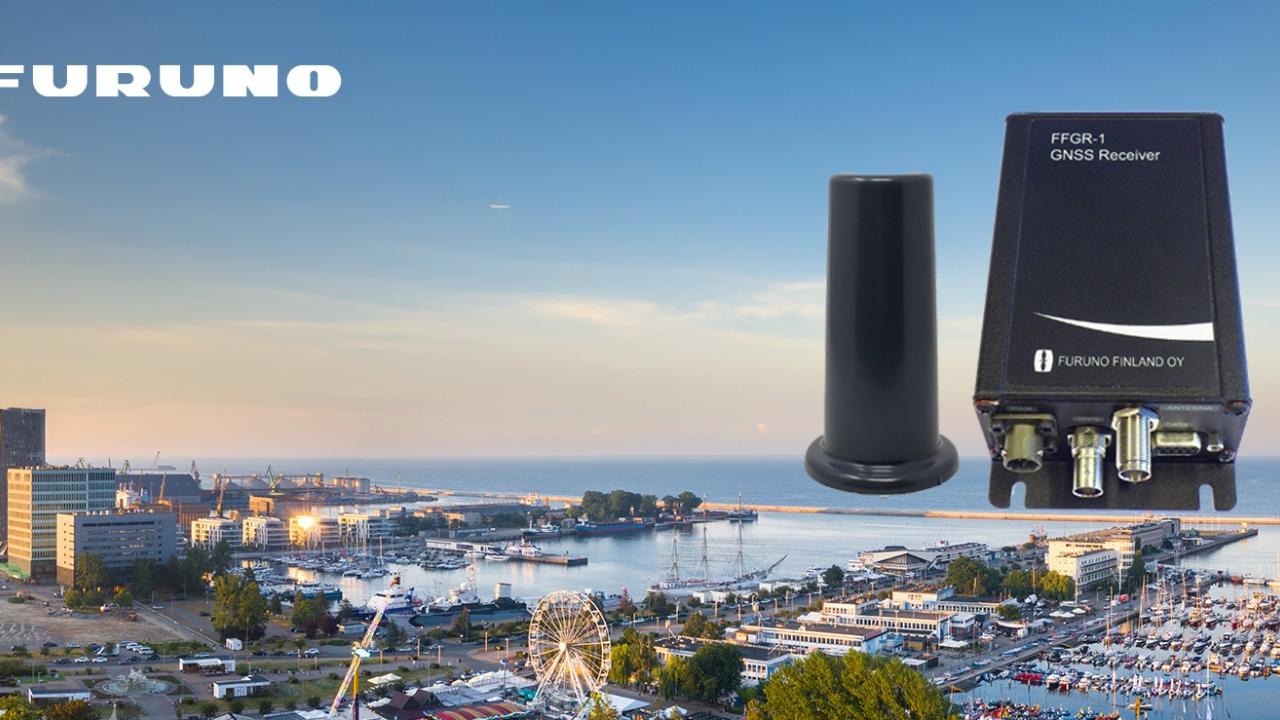
Across the Baltic Sea and North Sea, GNSS interference has shifted from an occasional annoyance to a persistent navigational risk. In places like the Gulf of Gdańsk, jamming events are now recorded with increasing frequency, raising concerns for shipowners who depend on reliable satellite navigation for safe operations.
Dr. Jaroslaw Cydejko, PhD, Master Mariner Gdynia, from the Faculty of Navigation at Gdynia Maritime University, has spent more than two years researching GNSS interference patterns, tracking suspected sources, and documenting their impact on maritime navigation. His independent work has helped raise awareness across the maritime community about the operational risks caused by jamming and spoofing in northern European waters.
As interference incidents increased, shipowners and navigators began asking him for advice on countermeasures. When FURUNO Polska introduced a new jamming‑resistant GNSS receiver, Dr. Jaroslaw Cydejko was curious to see how it actually performed in controlled conditions. This curiosity led to the recent independent evaluation of the FURUNO FFGR‑5 GNSS receiver with the Tallysman AJ997XF anti‑jamming antenna, carried out at Gdynia Maritime University.
His willingness to share the findings is what made it possible to prepare this article.
A Closer Look at Jamming Resilience in Real Conditions
The testing team set up the FFGR‑5 alongside several standard single-frequency marine GPS receivers—including models from well-known global brands. All antennas had clear sky view and were exposed to controlled jamming signals at close range (7–11 meters), using different interference types and attack angles commonly encountered in the field.
Sixteen sessions were carried out, simulating realistic scenarios:
jamming from low elevation angles
four different jamming structures (AWGN, matched GPS C/A code jamming, wideband noise, and CW interference)
Mult constellation operation (GPS, Galileo, BeiDou, GLONASS)
observation of HDOP, satellite usage, and differential mode behaviour
This approach mirrors the kind of interference that vessels may experience near coastlines, ports, or industrial zones—especially in the Baltic region, where GNSS disruptions have been widely observed.
A Clear Result: The FFGR‑5 Maintained Its Position Throughout the Tests
Across all jamming categories and attack angles, the FFGR‑5 continued to provide a valid position, while the comparison receivers lost their fix almost immediately and did not recover until the jamming stopped.
Under interference, the FFGR-5:
HDOP increased only slightly (typically by 0.1–0.3).
The receiver consistently used 12 satellites, even while masking low‑elevation signals affected by jamming.
EGNOS signals were temporarily lost under certain high‑angle interference conditions—expected behavior given the low elevation of geostationary SBAS satellites in northern Europe.
Despite this, the receiver maintained stable positioning, supported by redundant multi‑constellation coverage.
The test data shows that multiband, multi‑constellation receivers with anti‑jamming antennas behave fundamentally differently from conventional maritime GPS units, which cannot withstand even modest interference.
Why This Matters for Shipowners Today
GNSS interference has become a recognized operational risk, especially in waters near conflict zones or areas with heavy industrial or military radio activity. As these disruptions grow more frequent, shipowners are moving away from single‑frequency GPS receivers and toward systems designed to withstand both deliberate and unintended interference. The recent test supports what many operators already suspect: multiband, multi‑constellation receivers combined with anti‑jamming antennas offer a clear improvement in navigational resilience.
FURUNO provides several solutions for vessels operating in interference‑prone regions. The FFGR‑1 and FFGR‑5 receivers deliver robust multiband positioning, while the FFSP‑100 monitoring unit gives crews continuous insight into the GNSS environment. Together, they offer a practical toolkit for strengthening navigation capability when jamming or spoofing becomes a concern.
The maritime community depends on independent, real‑world testing to understand how navigation equipment performs under actual interference. Thanks to Dr. Jaroslaw Cydejko’s long‑term monitoring work at Gdynia Maritime University and his decision to independently test and share his findings on the FFGR‑5, the industry gains valuable insight into how modern receivers behave when exposed to genuine jamming conditions. His work helps guide shipowners toward safer and more resilient navigation wherever GNSS signals are at risk. FURUNO sincerely thanks Jaroslaw for his effort, expertise, and commitment to advancing maritime safety.

This article is written by:
Furuno Danmark A/S
FURUNO DANMARK A/S (FDK) is a subsidiary of FURUNO Electric Co. Ltd., a global leader in maritime electronics. As part of our mission to improve safety and efficiency at sea, FURUNO offers a variety of navigation, communication, and sustainable fishfinding equipment. We also provide a comprehensive range of maritime solutions, including sonar, radar, ECDIS, GPS, GMDSS, and offshore communications, as well as coastal monitoring and meteorological radars.
See profile
